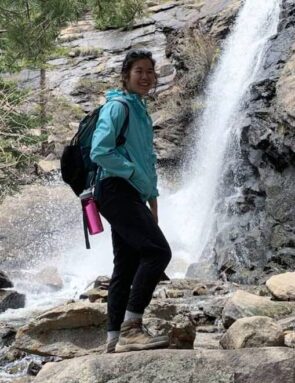

I woke up at 3am and decided to book this hike – which is very typical of me. My best ideas arrive in the middle of the night, usually followed by impulsivity and an intense “let’s just do it” energy. This one stuck. Two friends decided to join, which I was grateful for. It felt like the right balance between challenge and support.
The Thorsborne Trail on Hinchinbrook Island is often described as one of Australia’s most beautiful coastal hikes in Far North Queensland (FNQ) – and also one of the most physically demanding. This 32km trail weaves together beaches, rock scrambling, creek crossings and dense tropical forest. It’s stunning!
Trip Overview
- Total distance: 32km over 4 days
- Direction: North to South (Ramsay Bay to George Point)
- Difficulty: Moderate to Strenuous
- Best season: April – September (we went in late October)
- Permits: Required and limited – book well in advance
- Campsites: $7.25 per person / night (choose the # of nights when you book your permit)
- Transfers: Ferry with Absolute North Charters (vehicle parked in Lucinda)
- Water: Not always reliable – plan carefully
- Wildlife: Crocodile habitat – be Croc Wise at all times and check tides.
Many hikers choose to walk South to North, but after some research, we decided North to South made more sense for us, particularly tides and terrain.
Timing & Conditions
April – September is when they suggested this hike, but I could only get a permit for late October, which was hotter and dryer with less running creek water! Many hikers choose to go from South to North, but with some research, we thought North to South was better.
If you’re hiking outside the recommended season, water planning becomes critical. We had to walk a bit further in for running water. I carried a 6L water pouch with a filter, which allowed me to collect adequate water for the three of us from a running creek on Day 1 and carry it back to camp to filter into individual bottles.

Day 1: Ramsay Bay -> Little Ramsay Bay
- Distance: 6.5km
- Campsite: Little Ramsay Bay
- Facilities: Composting toilets, food storage racks and poles
We arrived at Ramsay Bay via ferry and started the hike after a calm, scenic ride with John from Absolute North Charters. Day 1 was relatively short and gentle compared to what was coming, which made it a nice introduction to the island.
We set up camp under shady coastal trees as Little Ramsay Bay. Having pack and food racks was reassuring – especially in such a remote environment.


Day 2: Little Ramsay Bay -> Zoe Bay
- Distance: 10km
- Facilities: composting toilets, picnic tables, pack rack/poles
This was probably the toughest day for me. There was significantly more rock hopping, beach walking and scrambling, which slows you down far more than the distance suggestes.
Zoe Bay itself is beautiful and feels like a reward at the end of a long, technical day. The campsite is well set up, but this is where the physical reality of the trail really sets in.


Day 3: Zoe Bay -> Mulligan Falls
- Distance: 10km
- Water: Not reliable at the campsite. We filled some up at Mulligan Falls.
Day 3 had a mix of ups and downs with more creek crossings. We filled up water near Mulligan Falls. Mulligan Falls was one of the highlights of the hike. The campsite is very close to the waterfall and swimming hole, which it the perfect place to wash off seat, salt, and exhaustion. It felt grounding and restorative after a demanding couple of days. Very refreshing!


Day 4: Mulligan Falls -> George Point
- Distance: 7.5km
This final stretch is mostly coastal walking, but the tide crossing near George Point requires careful timing. Because we were ahead of schedule, we waited for a safer tide window – drinking coffee on the beach and soaking up the last moments of the island. This felt like the right way to finish: unhurried, present, and respectful of the environment rather than rushing.

Final Thoughts
The Thorsborne Trail is physically demanding. My two friends are triathletes, so they probably found parts of it easy! It was a reminder of how important training and smart packing are – especially on technical terrain. Many hikers choose to not hurry and complete this trail over 5-6 days. This hike gives you raw beauty, solitude, and a deep sense of accomplishment.
Preparation & Packing List
The Thorseborne Trail is remote, physical, and weather-exposed, so preparation matters. Below is what I packed for a 4-day North to South walk in late October, with a few personal notes on what worked for me.
Shelter and Sleep
- 2-persons tent – I also own a 1-person tent, but chose the 2-person for extra space and comfort. The weight difference was minimal.
- Sleeping bag – It was very hot in October, you could get awat without a heavy sleeping bag or use a very light one.
- Sleeping mat/mattress
Clothing and Footwear
- Hiking boots – I considered trail running shoes, but chose boots for better ankle support on uneven terrain and rock scrambling.
- Sandals – I clip my TEVA sandals to the outside of my pack. Perfect for camp and creek crossings.
- Hiking clothes – a few sets of clothes and shorts (nothing fancy).
- Hat, sunglasses and sunscreen – Be Sun Smart in the tropics!
Water & Hydration
- 2L hydration bladder (in camp)
- 6L water pouch that comes with my filter system – Sounds excessive but worked out well on this hike!
- Electrolyte gummues – easy, lightweight, and helpful in the heat.
Food & Cooking
- Camp stove (e.g. jetboil and fuel + lighter/matches)
- Utensils, mug, foldable bowl
- Dehydrated meals (for 3 nights)
- Snacks and lunches – I had nuts and protein bars, kept things simple.
- Breakfast – I pack muesli and Chia seeds in 4 individual ziplock bags with powdered milk (personal preference and super easy).
- Coffee – essential! My friend brought her Aeropress and I was spoiled. Otherwise, it would be instant coffee for me.
Insects & Camp Comfort
- Mosquito spray – absolutely essential. October had a lot of mossies.
- Mosquito coils – the ferry crew kindly gave us coils for our 2nd night at Zoe Bay, which helped a lot.
Safety & Navigation
- First aid kit (including snake bandage)
- Blister band-aids (I didn’t get any luckily!)
- Hiking poles – I brought them but barely used them due to frequent scrambling and climbing over rocks.
- Torch/headlamp
Pack & Protection
- Toiletries
- Toilet paper
- Portable charger and cable
- Small towel